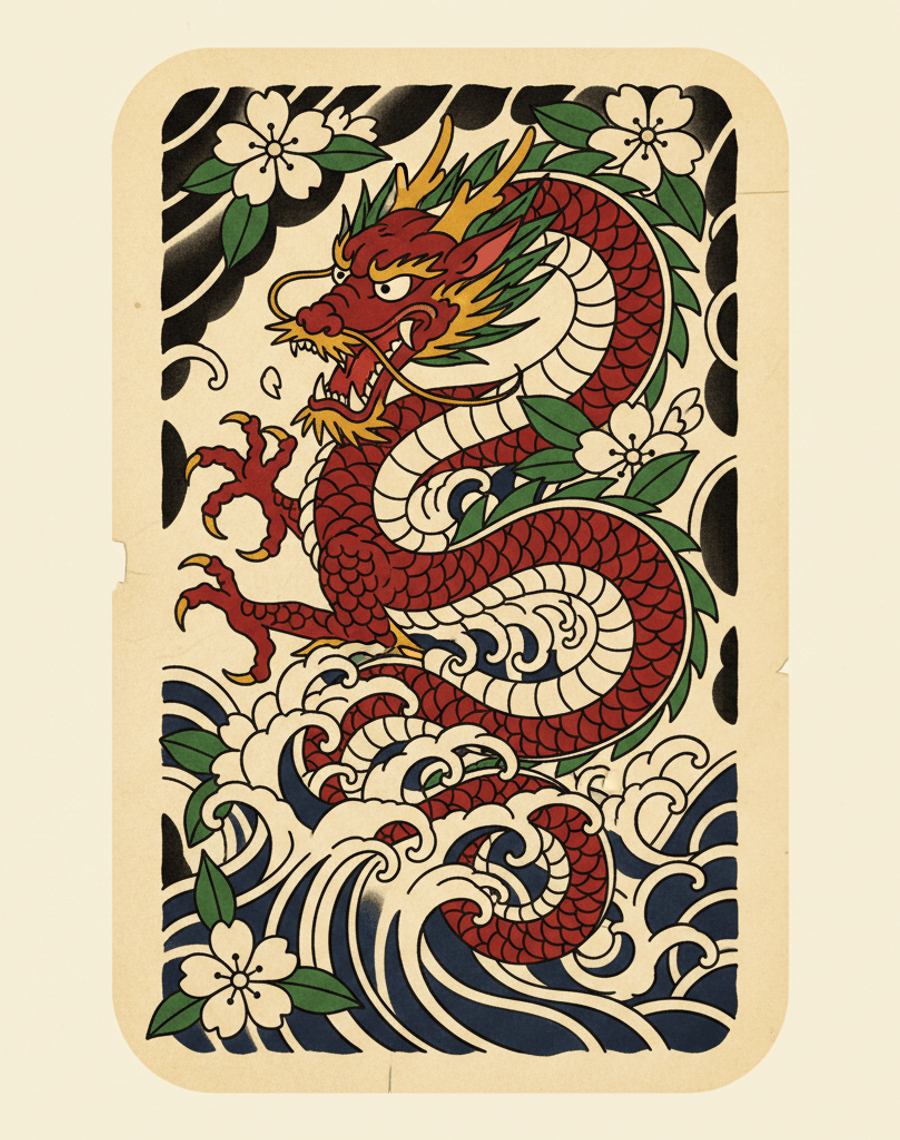
Coiling Dragon
“Coiling dragon among waves and blossoms — power and protection.” — Strength
Meaning & Symbolism
The Japanese dragon symbolizes wisdom, strength, and protection. Unlike Western dragons, the ryū is a benevolent guardian associated with water and rainfall.
History & Origin
Dragons entered Japanese art from Chinese mythology over a millennium ago and became central to irezumi (traditional full-body tattoo) during the Edo period (1603–1868).
Cultural Context
In irezumi, the dragon typically winds across the back or full body, paired with wind bars, water, and blossoms. Placement and direction carry meaning within the composition.
Element Breakdown
Coiling body (adaptability) · claws (power) · waves (life’s currents) · cherry blossoms (impermanence) · wind bars (movement of fate).
Traditional & Modern
Full back pieces remain the classical form; modern clients often take a single dragon segment as a sleeve or thigh piece.
Style Notes
Japanese (Irezumi): flowing organic composition, wind-and-water backgrounds, layered color with grey wash shading.
Sources: Horiyoshi III design literature; Edo-period woodblock references.


